Generic pet-friendly house cleaning tips say to vacuum more and buy an enzyme cleaner. But pet-friendly house cleaning tips for Littleton, Colorado need to account for dry, high-altitude air that keeps dander airborne longer, crystallizes pet urine faster, and traps odors indoors for six months of heating season. The routine that works in a humid Atlanta home will fall short in a Front Range living room.
- Colorado’s dry air keeps pet dander suspended indoors longer than humid climates, and sealed homes during heating season (October through April) concentrate allergens further.
- You have just a few minutes to blot a pet accident on carpet in Colorado before uric acid crystallizes and bonds to fibers, not the 10 to 15 minutes national guides suggest.
- Golden retrievers, Australian shepherds, and Australian cattle dogs are among the most common breeds in metro Denver, and all are double-coat shedders with two annual coat blows.
- Enzyme-based cleaners break down odor compounds at the molecular level, while baking soda and masking sprays only address surface smells temporarily.
- Of Clearview customers who share pet details with us, 71% confirm they have pets at home, which is why our team scopes pet-home cleans differently from a standard visit.
Why Colorado's Climate Makes Pet Cleaning Harder
Colorado's dry, high-altitude air keeps pet dander suspended indoors longer than it would in a humid climate. According to Gold Star Heating and Air, low indoor humidity means airborne particles like pet dander take longer to settle onto surfaces where you can clean them up. During heating season (October through April), sealed windows and forced-air systems recirculate those particles constantly.
This creates a compounding problem for Littleton pet owners. In summer, you can open windows and dilute the dander load. But for six months of the year, your home is a closed loop. The CSU Veterinary Health System notes that poor indoor air quality affects pets themselves, not just humans, so keeping dander under control protects your family and your animals.
One thing our team notices when we clean Littleton homes during winter is that pet hair accumulates faster on baseboards, vents, and upholstered furniture. The static charge from dry air makes hair cling to everything. You need deliberate, pet-specific routines between professional cleanings.
Daily and Weekly Pet Hair Routines That Actually Work
The most effective approach treats your daily habits and professional cleanings as two halves of the same system. Your routines manage the surface buildup, while a standard cleaning or deep cleaning removes the embedded dander, body oils, and odor that home tools can't reach.
Daily Routine (5 to 10 Minutes)
- Rubber glove swipe on upholstery. Pull on a damp rubber dishwashing glove and run your hand over couch cushions. The rubber grabs pet hair better than most lint rollers.
- Paw wipe station at every entry door. Keep towels or disposable wipes by the doors. A quick paw wipe after walks keeps mud, salt, and allergens off your floors.
- Shake out the doormat. Takes 30 seconds. Traps more hair and dirt than you'd expect.
Weekly Routine (30 to 45 Minutes)
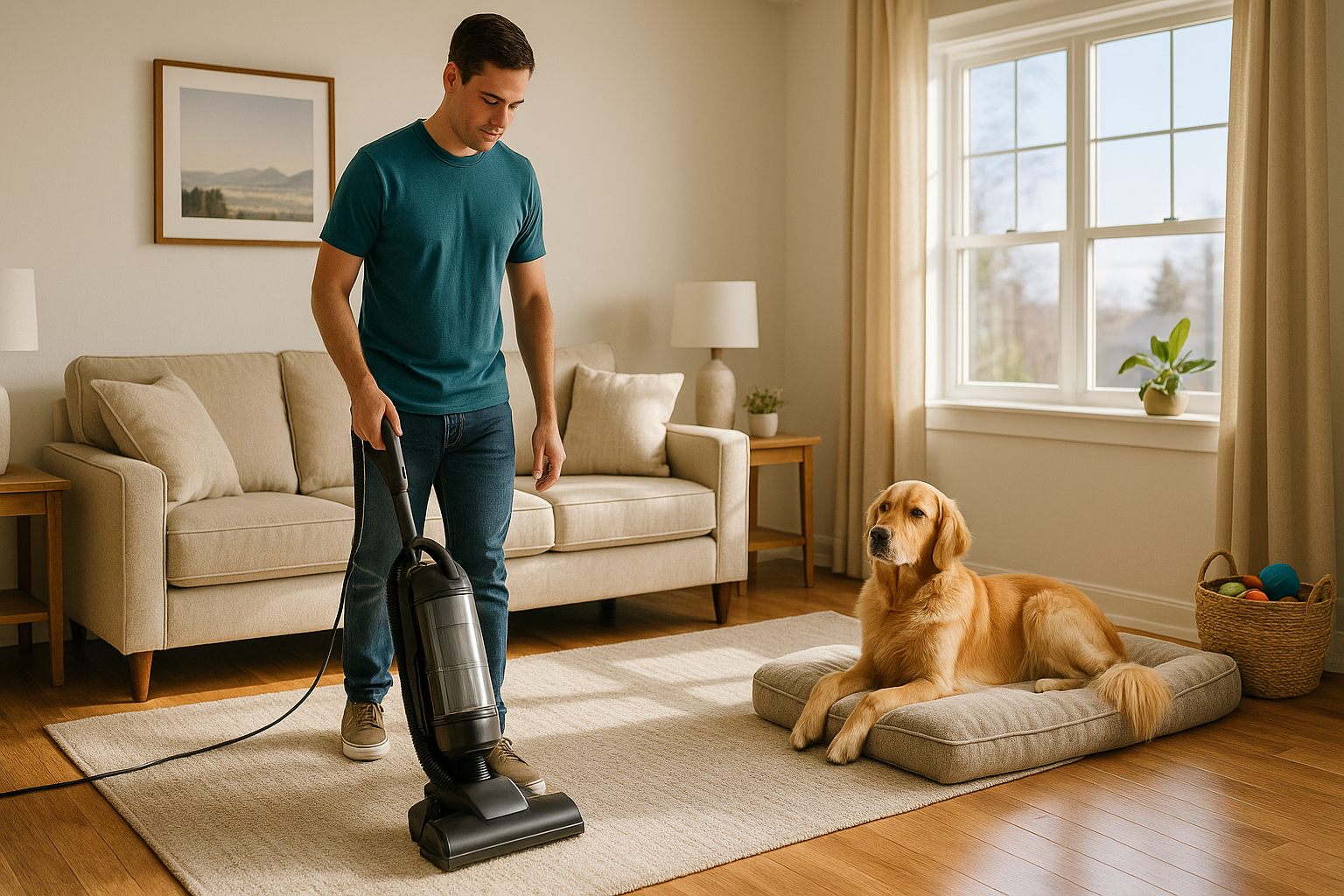
- Vacuum in two-direction slow passes. Run the vacuum north-south, then east-west to lift hair from both directions of the carpet pile. Use a HEPA filter vacuum with a rubber brush roll.
- Launder pet bedding with a baking soda rinse. Half a cup of baking soda in the rinse cycle neutralizes odor without fragrance residue.
- Lint-roll curtains and fabric lampshades. These vertical surfaces collect airborne hair as static fades.
| Vacuuming Approach | Hair Removal | Dander Capture | Time per Room |
|---|---|---|---|
| Single-pass, standard vacuum | Fair | Poor (no HEPA) | 3 min |
| Single-pass, HEPA vacuum | Good | Good | 4 min |
| Two-direction pass, HEPA vacuum | Very good | Very good | 7 min |
| Two-direction + rubber brush roll | Best | Best | 8 min |
Controlling Pet Odor Between Professional Cleanings
Pet odor comes from three sources: urine residue, body oils absorbed into fabrics, and saliva dried onto surfaces. Each requires a different approach, and masking sprays address none of them.
- Enzyme cleaners break down uric acid in pet urine at the molecular level. They eliminate the source rather than covering it.
- Baking soda absorbs surface odors. Sprinkle it on, let it sit 15 minutes, then vacuum. Good for mustiness, but it won't reach urine soaked into carpet padding.
- Masking sprays (Febreze, scented aerosols) coat the odor with fragrance. The smell returns within hours.
Act Fast on Pet Accidents in Colorado
National guides say to blot pet accidents within 10 to 15 minutes. In Colorado's dry air, that window shrinks to just a few minutes. Uric acid crystallizes faster at low humidity, bonding to carpet fibers permanently. Keep enzyme cleaner and towels within reach of every carpeted room.
The Nose-Blind Problem
We once arrived for a move-out clean in Littleton for a customer who told us there were no signs of pets. We detected odor within moments of walking in. Pet owners naturally adapt to their home's scent, which is why a fresh-eyes (and fresh-nose) professional clean makes such a difference.
Pet-Safe Cleaning Products: What to Use and What to Avoid
Not every "green" or "natural" product is safe for pets. The Animal Humane Society warns that several common household cleaners contain ingredients toxic to dogs and cats on contact or through fumes.
What to Avoid
- Phenols (found in pine-based cleaners like Pine-Sol). Toxic to cats especially.
- Essential oils in cleaning solutions. Tea tree, peppermint, eucalyptus, and citrus oils are toxic to cats and can irritate dogs.
- Bleach fumes in enclosed spaces. Ventilate and keep pets out until surfaces are dry.
- Fabuloso and similar floor cleaners. Denver-area pet owners often ask if Fabuloso is safe for dogs. Fabuloso is not phenol-based, but its surfactants and synthetic fragrances can still cause GI irritation if pets walk across wet floors and then groom their paws. Let floors dry fully before letting pets back in.
Safe Alternatives for Littleton Pet Homes
- Enzyme-based cleaners (for accidents and odor)
- Plain dish soap diluted in warm water (for surfaces)
- Diluted white vinegar on hard floors (1 part vinegar, 3 parts water)
- Baking soda for fabric and carpet odor absorption
- Unscented castile soap for mopping
In my experience working with pet households across the Denver metro, the simplest kit works best. A standard cleaning with our team uses products we've vetted for pet and child safety.
Upholstery and Rugs in a Pet Household
Upholstered furniture and area rugs absorb pet hair, dander, and odor more deeply than any other surface in your home. The right maintenance routine makes a measurable difference.
For furniture, microfiber is practical because lint rollers work well on it and many covers are machine-washable. Leather wipes clean easily but shows scratches. Performance fabrics (Sunbrella, Crypton) resist staining and odor.
For rugs, sweep with a rubber-bristle broom before vacuuming to loosen embedded hair, then follow with two-direction passes. Rotate rugs every 2 to 3 months to even out pet traffic wear.
Here's the thing: if a rug still smells after baking soda treatment and vacuuming, the odor has soaked into the backing or padding. A deep cleaning can reach that layer. We recommend a professional rug and upholstery refresh at least twice a year for pet households.
Shedding Season Strategy for Colorado Dog Owners
Colorado dogs experience two major shedding peaks each year: the spring coat blow (March through May) and the fall double-coat prep (September through October). Daily hair output can double or triple during these windows.
Per 9News Colorado and Pets Best, the most popular breeds in metro Denver include golden retrievers, Australian shepherds, Australian cattle dogs, and goldendoodles. All are double-coat breeds, so Littleton households face heavier shedding loads than average.
During peak shedding weeks:
- Brush your dog outdoors so the loose undercoat doesn't enter your home. Even 5 minutes of outdoor brushing cuts indoor hair noticeably.
- Vacuum every 2 to 3 days instead of weekly. Focus on sleeping and resting spots.
- Wash pet bedding weekly instead of biweekly. The baking soda rinse still applies.
- Schedule a seasonal professional reset. A deep cleaning at the end of each shedding peak removes the embedded hair and dander that built up over weeks.
Now, picture a client with a golden retriever and a cattle dog in the same house. She described her April carpet as "growing fur." We scheduled a deep clean for early June. Manage the peak, then let a professional handle the reset.
Frequently Asked Questions
What is the best way to clean my house when I have pets?
Combine daily quick routines (rubber-glove swipe on upholstery, paw wipes at the door) with weekly deeper tasks (two-direction HEPA vacuuming, pet bedding laundry with baking soda). Pair those habits with professional cleanings every 2 to 4 weeks for embedded dander and oils that home tools can't fully remove.
How do I keep my house smelling fresh with dogs?
Use enzyme-based cleaners on accident spots within a few minutes. Sprinkle baking soda on carpets weekly, let it sit 15 minutes, then vacuum. Open windows when Colorado weather allows. Avoid masking sprays, which only cover odor temporarily.
Can I mop with Fabuloso if I have a dog?
Fabuloso is not phenol-based, but its surfactants and synthetic fragrances can cause GI irritation if your dog walks on wet floors and then licks their paws. Safer options include diluted white vinegar, unscented castile soap, or a dedicated pet-safe floor cleaner. Let the floor dry completely before letting pets back in.
How often should I professionally clean a home with pets?
For most Littleton pet households, every 2 to 4 weeks for a standard cleaning works well, with a deep cleaning twice a year. Homes with multiple pets or heavy shedders may benefit from more frequent service.
Are professional cleaning services safe for pets?
Reputable services use products vetted for pet and child safety. At Clearview, we select cleaning solutions effective on pet hair, dander, and odor without toxic fumes or residues. We also ask about pets during booking so we can plan for their comfort.
Ready for a Professional Pet-Home Clean?
A professional pet-home clean goes beyond a standard visit. Our team addresses embedded pet hair in upholstery, dander buildup in baseboards and corners, and odor at the source, not just the surface. We structure pet-home cleans with extra scope to cover the areas where pet residue concentrates most.
Our team works with pet households across Littleton and the Denver metro every week. We know what pet homes need because we see it daily.
That means focused attention on baseboards, vents, upholstery edges, and high-traffic pet zones. For heavily soiled or multi-pet homes, we start with an in-person walk-through before quoting.
If you're keeping up with daily routines but your home still feels like it's falling behind, that's normal. The professional reset is the other half of the system. Request a free estimate and let us build a cleaning plan around your household, pets included.